Jamalpur, Mymensingh Division
The Jamalpur Kantha Circle
Nakshi kantha embroidery · 142 women across 11 villages · Partnered since 2021
Nakshi kantha began as thrift: layering worn saris and holding them together with a running stitch. In Jamalpur it became narrative — lotus, fish, sun and boat motifs read left to right across a quilt. The circle works from home, on their own hours, paid per stitched panel rather than per day, which is the difference between piecework and a wage that respects a school run.
“My mother stitched kantha for the house. I stitch it for houses I will never see.”
Pirojpur & Jhalokati, Barishal Division
Pirojpur Hyacinth Weavers
Water hyacinth and hogla weaving · 88 households · Partnered since 2022
Water hyacinth is an invasive plague on the southern rivers — it blocks boats, starves fish of oxygen and returns every monsoon. Harvesting it is river maintenance. The stems are pulled, sun-dried for two weeks until they turn the colour of straw rope, then coiled and stitched over a cane frame.
“People used to pay to have the weed cleared. Now the weed pays us.”
Bogura, Rajshahi Division
The Bogura Kilns
Terracotta throwing and firing · 6 potter families · Partnered since 2021
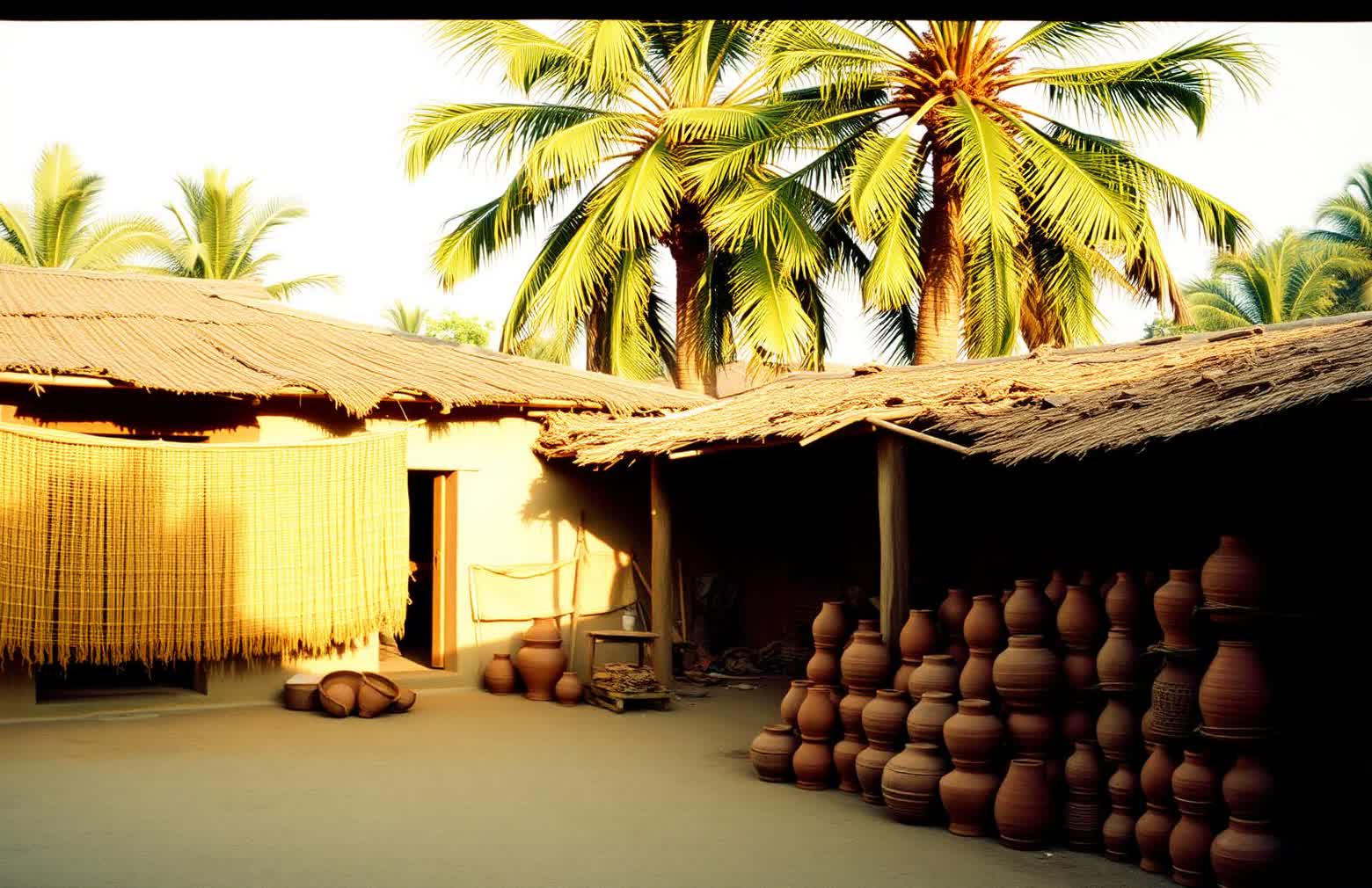
Six families work the same clay bank their great-grandparents dug. Everything is thrown on a foot-driven wheel and fired in an updraft wood kiln for eighteen hours. Nothing is glazed. The colour differences you see between pieces come from where they sat in the kiln, not from a pigment.
“The kiln decides the colour. We only decide the shape.”
Narayanganj, Dhaka Division
Narayanganj Jute Atelier
Jute cutting, weaving and stitching · 64 makers · Founding partner, 2020
Narayanganj was the jute capital of the world before synthetic sacking gutted the trade in the 1970s. The looms never entirely stopped. Our atelier weaves a tighter 12-oz cloth than sacking grade, finishes edges with cotton binding and sets brass hardware by hand.
“For thirty years the world told us jute was cheap. We knew what it was.”
Kushtia & Cumilla
Kushtia Handloom Cluster
Khadi spinning and pit-loom weaving · 37 weaver families · Partnered since 2022
Khadi is cotton spun by hand on a charkha and woven on a pit loom sunk into the earth floor. No electricity enters the process at any stage. A weaver produces four to six metres a day. That is the whole reason it feels the way it does.
“The loom is in the ground because the ground keeps it cool.”
Dhamrai, Dhaka Division
Dhamrai Metal Crafts
Lost-wax brass casting · 1 family workshop, 9 casters · Partnered since 2023
The family has cast brass by the cire perdue method since the 1700s. A wax model is coated in river clay, fired until the wax runs out, and filled with molten brass. The mould is smashed to free the casting, which means every mould makes exactly one object and no two are identical.
“Every piece breaks its own mould. That is not marketing, it is method.”
Sylhet Division
Sylhet Cane & Bamboo
Shitalpati, bamboo and areca work · 53 households · Partnered since 2022
Shitalpati — literally 'cool mat' — is on UNESCO's list of intangible cultural heritage. Murta cane is split into strands finer than a millimetre and woven so tightly the mat can be folded like cloth. The same cluster presses fallen areca sheaths into tableware in the dry season.
“A good pati is measured in strands to the inch, like a rug.”
Manikganj, Dhaka Division
Manikganj Paper Mill
Hand paper-making · 24 makers · Partnered since 2023
Jute mill offcuts, cotton rag, rice straw and water hyacinth are beaten to pulp, floated in a vat and lifted out one sheet at a time on a wooden deckle. Sheets are pressed and dried on a wall in the sun. The mill uses no chlorine and recirculates its water.
“Every sheet is lifted out of water by a person. That is all a mill is.”
Commission a cluster directly
Bulk buyers and private-label brands can commission a specific cluster for an exclusive run — your colourway, your dimensions, your label.